
Being disciplined makes you reliable, calm, and emotionally intelligent. An excellent way to improve your discipline as a couple is by training as a couple.
Let’s be honest: passion is easy, but staying power is hard. Many of us overlook how self-regulation, the ability to pause before reacting, listen before speaking, and honor commitments, shapes the quality of our relationships. Whether you are navigating a long-term partnership or building a new relationship, couples personal training in Dubai with Athleaders can significantly improve your bond.
Here, we act as your guide, outlining 10 actionable ways discipline fosters stronger unions and the specific impact of fitness on relationships.
10 Reasons Why Training and Discipline Help Relationships
Many people prefer to train with their partner, often using shared fitness goals for couples as their milestones. Not only do they experience the psychological benefits of training together, but they also develop a stronger bond and deeper understanding.
Let’s take a look at ten ways how self-discipline improves relationships:
1. Improves Emotional Regulation
Disciplined individuals are better able to identify and manage their emotions, rather than reacting impulsively during conflicts. Personal training regularly helps people become more disciplined and conscious of their words and actions. When training with your partner, both you and your partner learn more about how emotions manifest and affect both of you.
By practicing emotional regulation, you can avoid shouting, saying hurtful things, or reacting disproportionately to stress. This helps you navigate emotional challenges better and helps develop healthy lifestyle habits for partners, which prevents damage to the relationship.
2. Enhances Consistency and Reliability
Discipline involves keeping promises and following through on commitments, and the same is true for relationships. A committed partner who is able to uphold their word is important, and the practice builds trust over time.
Disciplined training sessions require commitment and dedication. When you consistently show up for your partner’s workouts in Dubai, it creates a safe, reliable environment. This reduces anxiety and uncertainty in the relationship, since you both know there will be a follow-through on promises.
3. Promotes Constructive Conflict Resolution
When training together, communication is key. This communication slowly transfers into your personal lives, and you both move on from using “I” statements to addressing issues directly and calmly. A development of this understanding and communication skill is one of the key psychological benefits of training together.
Discipline learnt through couples training helps you pause before reacting. This allows you both to resolve disputes constructively rather than letting them escalate into damaging arguments.
4. Cultivates Empathy Through Shared Struggle
Training together as a couple involves active listening and learning to synchronize with your partner. It also allows both individuals to witness each other’s struggles, such as fatigue or frustration with a new exercise. This builds mutual respect and understanding of each other’s limitations and efforts.
Further, the non-verbal matching where you corregulate with your partner fosters a deeper, unspoken understanding and emotional bond, increasing empathy. This also enables you to understand your partner’s perspective and feelings, which strengthens emotional intimacy.
5. Sets Effective and Healthy Boundaries
Physical fitness training also helps people understand where their limits lie. With couples’ personal training in Dubai, you can also learn the boundaries of your partner and grow to respect them. Both you and your partner define your autonomy, learn to respect the limits of your body, and those of your partner.
Plus, the “you-go, I-go” structure fosters teamwork while maintaining individual accountability. This also creates mutual respect, preventing burnout, resentment, and the overstepping of personal limits.
6. Reduces Ego and Improves Understanding
A significant impact of fitness on relationships is learning humility. During fitness training sessions, we come face-to-face with the physical limitations that we need to acknowledge before we get better. Training together shifts the focus from individual vanity to mutual effort and shared progress. It also improves trust, understanding, and communication.
Physical exertion lowers cortisol (the stress hormone), which reduces the “fight-or-flight” response, minimising defensive, ego-driven arguments. Also, the nonverbal bond makes you more attuned to your partner. Thus, as a couple, you learn to cooperate, compromise on workout times, and celebrate joint success.
7. Leads to Better Prioritisation of Time and Energy
A disciplined approach means managing your time to ensure you are present for your partner, rather than letting work or personal stress dominate your life. Plus, your partner serves as a “living calendar reminder,” reducing the likelihood of skipping sessions even when tired. The structured time management maximises efficiency, preventing burnout and ensuring energy is used efficiently during work periods.
Partner workouts in Dubai foster a mindset of “getting it done”, teaching individuals to prioritise their well-being and make consistent, disciplined choices. Thus, they are a great way to build a balanced relationship and ensure your partner receives quality attention rather than just “leftover” energy.
8. Promotes Self-Reflection and Growth
Training with a partner often brings to light individual habits, such as self-sabotage, lack of discipline, or fear of failure, which often go unnoticed when training alone. By setting and reviewing shared fitness goals for couples, you can understand how individual goals tie into your shared future.
A little friendly competition and encouragement from a partner empowers individuals to try new, more challenging, or intimidating exercises. Working out together helps couples understand each other’s motivations and reactions, which translates to better support in stressful, non-fitness situations.
9. Increases Patience, Self-Esteem, and Mutual Respect
One of the most important couple’s fitness benefits is learning how to be patient with your partner and respect them. Working out is a physical release for stress, which lowers cortisol and irritation, reducing fights over small, daily stressors. Working out with a partner in a supportive, shared environment helps individuals feel more confident, which then boosts the health of the relationship.
Regular exercise increases confidence in one’s own body, which reduces insecurity and allows for a more authentic connection with a partner. Watching a partner work hard in the gym causes respect to return, as partners see each other trying to improve.
10. Builds a “Growth Mindset” Together
Setting and achieving fitness goals together (e.g., training for a 5K, lifting heavier, or mastering yoga poses) fosters a “we” mentality rather than individual competition. When one partner lacks motivation, the other helps them push through, turning “I can’t” into “we can”.
Pushing through a challenging workout side-by-side teaches couples to handle challenges together. Further, the growth mindset embraces that progress is not linear and staying consistent is key. Thus, couples can focus on their long-term goals and health rather than immediate perfection.
How to Implement Training and Discipline Through Workouts Without Being Harsh
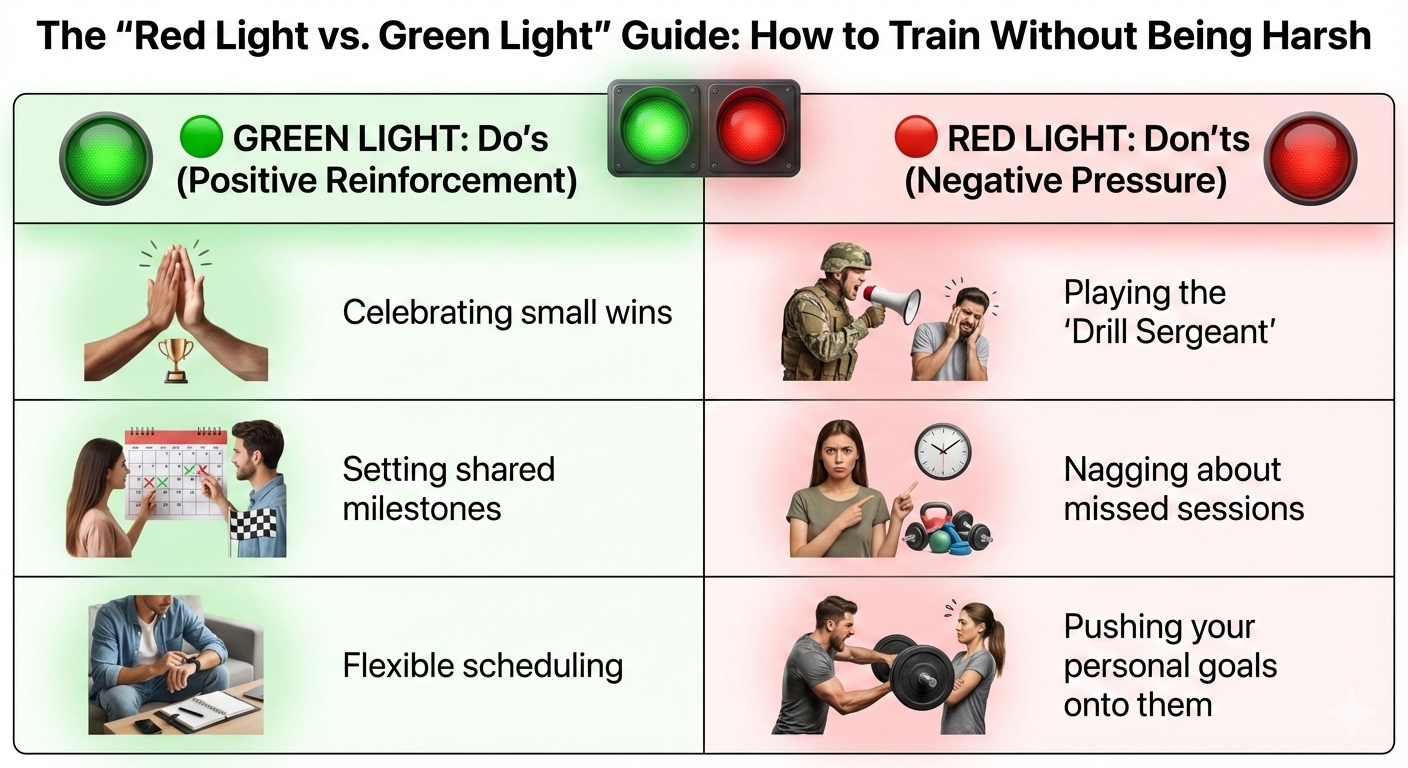
Couple’s personal training in Dubai can sometimes feel “pushy” if one partner acts like a drill sergeant. The goal is to enjoy the couples fitness benefits that preserve your wellness, not destroy your peace.
Let’s take a look at what you should refrain from doing during couples’ fitness training in Dubai:
- Don’t push your goals onto your partner: Sit down and discuss shared fitness goals for couples. Ensure they are specific, measurable, and achievable.
- Do not nag your partner into the training sessions: Positive reinforcement works wonders, while nagging just creates a negative impression. Go for a fitness strategy that accommodates both your rhythms and goals.
- Don’t go for rigorous, high-intensity training all at once: Try out fun fitness activities that make exercise feel less of a chore. Then, slowly build up your fitness and increase training intensity.
- Don’t have a very strict and rigid training regimen: Couples personal training in Dubai doesn’t always have to be inside a gym. Alternate gym days with a walk or run in a nearby park to keep things leisurely yet disciplined.
- Celebrate small wins: Doesn’t matter if your progress is big or small. Every milestone reached is a milestone to be celebrated. This will help build a positive bond with your partner.
Wrapping Up
True discipline goes beyond strict rules and rigid exercise routines. It is an excellent way of creating healthy lifestyle habits for partners, building communication, empathy, and understanding. Training together as a couple also lets people understand each other better and become more secure in their relationship.
Improving Your Bond with Your Partner with Training Discipline
Strengthen your bond today. Consult Athleaders Dubai for couples’ personal training in Dubai and get a custom regimen designed for your lifestyle.
Frequently Asked Questions
Discipline enables you to follow through on promises and remain consistent, which builds trust with your partner. When you are reliable, you create a sense of safety, knowing you will act in the best interest of the relationship.
Yes, it takes discipline to tackle difficult, uncomfortable, or recurring conversations. Instead of avoiding problems, a disciplined approach ensures you address them constructively, leading to long-term resolution.
Discipline is about progress, not perfection. When you inevitably make mistakes, self-compassion allows you to learn, apologize, and get back on track, rather than giving up or becoming defensive.
Start small: practice active listening without interrupting, manage your stress through healthy routines such as yoga and exercise, and consciously set aside dedicated time for your partner, treating these as essential commitments.